
- Compact and lightweight with a powder coated metal body.
- Formidable 9,000 BTUs of heat, with a windscreen for strong flame in windy conditions.
- Enamel drip pan for easy cleanup, and a piezoelectric starter for easy ignition.

- Lightweight aluminum construction with a double windscreen system.
- Solid brass burner delivering a powerful 15,000 BTUs.
- Proprietary magnetic mounting system for gas canister with built-in pressure sensor for safety.

- Up to 10,000 BTUs with a piezoelectric starter.
- A double wind guard, wider and taller than most.
- In-line regulator with a pressure-sensing safety shut-off.
Eating a big meal by the fire at your campsite is one of the most enjoyable ways to spend an evening. Cooking over the fire can be a lot of fun, but it does limit what you can cook. That’s where the butane camp stove comes in. Developed for use by caterers and chefs, the butane stove is one of the best and most affordable ways to cook up some grub while car camping, bbqing, or in the RV. Today we’re covering some of the best butane stoves on the market to help you find the one best suited to your style of camping.
Best Butane Stoves
Butane stoves are great for certain kinds of camping. They’re basically full size burners that you can cook large meals on with regular pots and pans. It’s important to keep in mind though that they aren’t for every camper.
Even the lightest butane stoves are several pounds without the fuel canister. If you’re a hiker or even just a camper who packs in their gear they’re probably not the best option.
Hiking stoves or wood burning camp stoves provide you with a much lighter and more portable cooking option. Unlike butane stoves though you won’t be able to cook with regular size pots and pans.
If you are an RVer or dedicated car camper though there are few stoves better than a quality butane camp stove. We picked out some of the best butane stoves available across a range of manufacturers, price points, and feature sets. Check them out and let us know what you think.
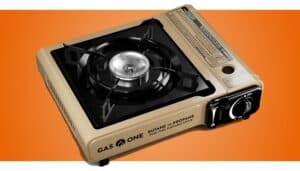
Gas One GS-3000 Portable Butane Camp Stove
The Gas One GS-3000 is a portable butane camp stove built for the long haul. It’s made from a lightweight powder coated metal with an enamel drip pan.
This makes it extremely light and resistant to rust from drippings and other liquids. It has a single burner capable of putting out 9,000 BTUs on high. With the windscreen around the burner that’s plenty of heat to cook just about anything, though like every butane stove it fades near freezing (see cold weather below).
It includes some really nice safety features. Gas One says a lever won’t latch a cartridge unless the dial is off, and a gas shut-off and a cartridge ejector trip if the pressure goes irregular.
The GS-3000 uses a piezoelectric starter and comes with a durable plastic carry case. All in all it’s a great option for a single burner butane camp stove. Just note that Gas One marks it “For Outdoor Use Only”, so it isn’t a stove for cooking indoors during a power outage.
Pros:
- Price: one of the least expensive full-size butane stoves.
- Powerful: 9,000 BTUs on high.
- Safety Features: a cartridge-locking lever plus a pressure shut-off and cartridge ejector.
- Ease of Ignition: the piezoelectric starter lights it without a match or lighter.
- Portability: comes with a durable plastic carry case.
Cons:
- Outdoor Use Only: Gas One doesn’t rate it for indoor cooking.
- Butane Sold Separately: no fuel canister in the box.
- Cold Weather: like all butane stoves, it struggles near freezing.
- Stock: sold out on Gas One’s own store when we checked in October 2026, though still in its catalog.
Iwatani Corporation of America 35FW Butane Stove
The Iwatani Corporation is a Japan based company that’s well known for their line of high quality portable stoves. The 35FW is a great example of their attention to detail, high levels of craftsmanship, and general quality.
It’s made from lightweight aluminum with a double windscreen system for excellent performance even outdoors. The burner is made from solid brass for corrosion resistance. It provides a massive 15,000 BTUs, enough to cook basically anything. Iwatani says it’s CSA approved “for indoor use in commercial restaurants and outdoor use”: a restaurant kitchen, not a home or an RV.
That’s just the start though, the Iwatani 35FW features some of the most advanced systems you can find in a butane stove. Instead of a standard lever lock for the gas canister it uses a proprietary magnetic mounting system.
This creates a perfect seal every time without the hassle of first lining up the canister and slotting it into the level system. It has a pressure sensor built into the magnetic assembly that automatically shuts off gas flow if the bottle becomes overheated or begins to depressurize rapidly.
The Iwatani 35FW is honestly one of the best and most feature packed butane stoves on the market. The only real downside is it’s high price, easily twice the cost of many similar butane camp stoves.
Gas One GS-3400P Dual-Fuel Butane and Propane Stove
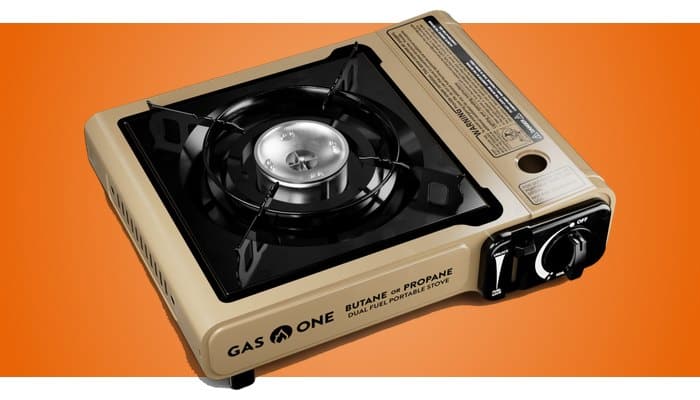
New in this update: it takes the place of the Camp Chef Butane One-Burner from our earlier list, because Camp Chef no longer sells a butane stove. We haven’t used the GS-3400P ourselves; it’s here on its maker’s specs.
The Gas One GS-3400P fixes butane’s big weakness. It runs on an 8 oz butane cartridge or a 16.4 oz propane cylinder, and propane keeps working far below freezing. On a cold morning you change the fuel, not the stove.
It’s the 8,000 BTU sibling of the GS-3000, in the same body with the same safety lever, pressure shut-off and cartridge ejector. It uses a piezoelectric starter, and Gas One marks it for outdoor use only.
If you camp in spring and fall, when mornings drop toward freezing, this is the butane stove to get.
Coleman Portable Butane Stove with Carrying Case
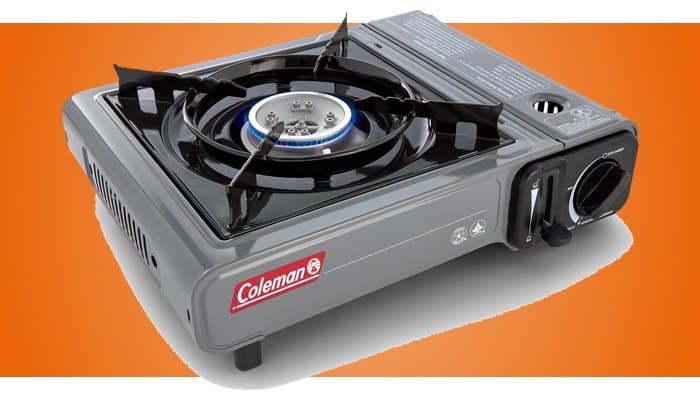
The Coleman Portable Butane Stove is a lightweight camp stove. It features a porcelain coated drip tray and has a cast aluminum burner.
This makes it easy to clean and highly resistant to corrosion or drip damage. It provides up to 7,650 BTUs and can run for up to 1.25 hours on a standard 8 oz bottle of butane.
The grate itself is larger than many similar butane stoves and can accommodate pots and pans of up to 10 inches. It features a piezoelectric ignition system and comes with a durable carry case.
Coleman has been making high quality outdoor equipment for nearly 100 years. Their butane camp stove shows all the hallmarks of their quality craftsmanship and attention to detail.
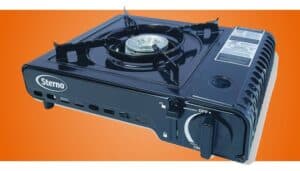
Sterno 10,000 BTU Portable Butane Stove
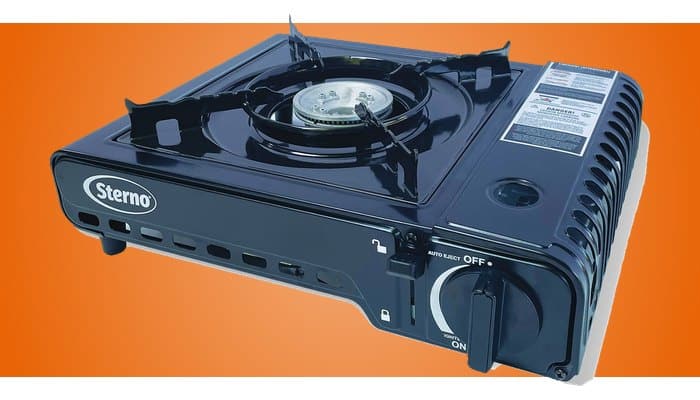
Sterno has replaced the 9,000 BTU 50106 we covered before with a 10,000 BTU model, with the same description and a stronger burner. We haven’t used the new one; it’s here on its maker’s specs.
The Sterno Portable Butane Stove is a bbq and catering focused stove option. It has an automatic safety shut-off sensor and a safety lock that help prevent mishaps. This makes it a great choice if you’re looking for a butane stove you can use at events as well as campsites.
On the older model, the windscreen wasn’t quite as effective under really windy conditions. Sterno’s 15,000 BTU stove adds a wind guard if that matters to you.
It’s a little bit more expensive than some of the other stoves on our list but does provide a lot of interesting features. Sterno doesn’t say whether it’s rated for indoor use, so treat it as an outdoor stove.
For RVers and campers who also love a good backyard bbq this Sterno butane stove is a good option.
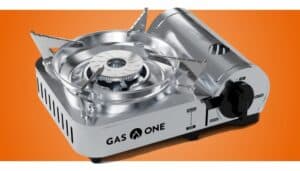
Gas One GS-800A Mini Butane Portable Gas Stove
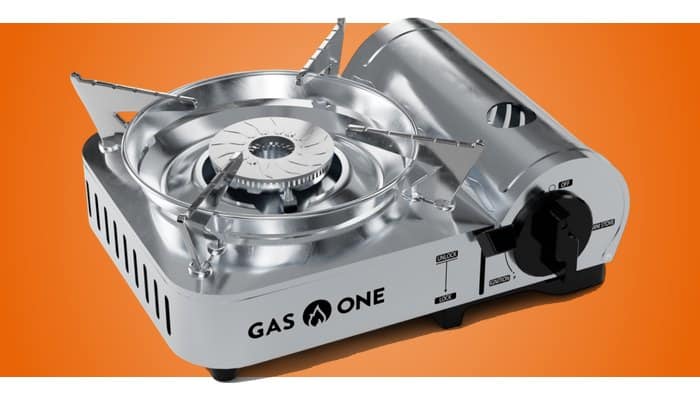
The Gas One Mini Butane Gas Stove is a compact stove for RVers, bbq enthusiasts and car campers. It provides 7,172 BTUs, and at 2.2 lbs it’s lighter than many other butane stoves.
The version we covered before, the GS-800P, could also run off larger propane canisters with an adaptor. Gas One has dropped it, and the current GS-800A runs on butane only. If you want propane as a backup, the GS-3400P above takes both.
It uses a piezoelectric starter and still takes a full 8 oz butane canister. At 9.6 × 8 × 3.9 inches it’s the smallest stove on our list.
If you’re looking for a small, lightweight butane camp stove the Gas One Mini is a good option.
Chef Master Butane Countertop Burner
The Chef Master Butane Countertop Burner with a whole lot to offer. It’s a bit beefier than many similar stoves and offers one of the best windscreens we’ve seen.
It provides up to 10,000 BTUs and has an automatic piezoelectric starter. The windscreen is wider and taller than those found on most other stoves. This helps protect it from stronger breezes and improves overall fuel efficiency.
The Chef Master has an inline regulator system that includes a safety cutoff switch. This protects you from any issues that might arise from an over or under pressurized canister of fuel.
The Chef Master is a durable and powerful butane stove. It’s a great option if you want something for use in a really windy campsite.
Best Butane Stoves Comparison Tables
| Stove | Best for | Output | Weight | Fuel | Maker’s indoor rating | Price | |
|---|---|---|---|---|---|---|---|
| Gas One GS-3000 | Overall best | 9,000 BTU | 3.1 lb | 8 oz butane | Outdoor only | $ | Check price |
| Iwatani 35FW | Most powerful | 15,000 BTU/hr | 4.2 lb | Iwatani 8 oz butane | Indoor commercial and outdoor (CSA) | — | Check price |
| Gas One GS-3400P | Best for cold weather | 8,000 BTU | 3.3 lb | 8 oz butane or 16.4 oz propane | Outdoor only | $$ | Check price |
| Coleman Classic 1-Burner | Trusted brand | 7,650 BTU | 5.2 lb | 8.8 oz butane | “Primarily” outdoor | $$ | Check price |
| Sterno 10,000 BTU | Best for events | 10,000 BTU | 4.93 lb | — | Not stated | $$ | Check price |
| Gas One GS-800A | Best compact | 7,172 BTU | 2.2 lb | 8 oz butane | Outdoor only | $ | Check price |
| Chef Master 90011 | Best in wind | 10,000 BTU | — | Butane marked BF1010 | Indoor commercial (ETL) | — | Check price |
Specs, fuel and indoor wording from each maker’s product page or FAQ, checked October 2026; Iwatani and Coleman from their latest archived pages (May 2026), because both sites refused our checks. “—” means the maker doesn’t publish it. Price bands at maker list price: $ under $35 · $$ $35–60; Iwatani and Chef Master don’t list prices.
Buyers Guide for Buying the Best Butane Stove
Picking out the best butane stove is pretty straightforward. There’s honestly not a huge difference between a lot of the stoves on the market, so you just need to look at a few key features such as heat output, price, and wind/weather protection.
| More Great Camp Cooking Gear |
|---|
| Lightweight Camp Mess Kits |
| Folding Camping Kitchens |
| Wood Burning Stove for Camping |
| Ultralight Camping Stoves |
| Camping Kettle for Open Fire |
Before you read our best butane stove buyer’s guide we think you’ll also like our best camp mess kit and best camping kitchen guides.
Price
Butane stoves are some of the most affordable camping stoves on the market. Most single burner models sit in the lowest price bands, and multi burner models or those made with premium features usually aren’t much more expensive.
Fuel too is inexpensive and widely available. This makes butane stoves much cheaper to operate once you purchase one.
Intended use
Butane stoves aren’t only useful to campers. They’re great portable stove units large enough to cook full size meals on.
Depending on how you intend to use your butane stove there are different features to look for. Campers prize portability, water/wind resistance, and lighter weight. If you’re in an RV or just looking for an outdoor stove to use during a BBQ or for an easy hot pot/fondue setup your butane stove can be heavier and generally more substantial.
BTU Rating
Stove heat output is measured in British Thermal Units, commonly called BTUs. For butane stoves the magic number you’re looking for is 7,000 BTUs.
This is comparable to a standard gas stove top burner and amply powerful enough to cook anything you need. If you plan to cook in especially cold or windy conditions more BTUs can be beneficial.
Burn Time
Burn time is one of the most important factors to consider when comparing different butane stoves. More fuel efficient stoves will provide you with a greater burn time for the same amount of fuel.
One thing to keep in mind when looking at listed burn times is what flame setting the stove is on. Many stoves will list ‘up to’ burn times. These usually only apply if you run the stove at the minimum setting.
Try and find the average burn time for a stove at maximum flame.
Ignition
We highly recommend you choose a butane stove with a built in ignition system. While not absolutely essential it is a very nice feature to have.
The vast majority of butane camp stoves use a piezo electric starter. Once you turn the gas on to the ignition setting you can press a button and trigger a small electric spark.
This ignites the flame quickly and without the need for batteries or something like a match or lighter.
Windscreen & Weatherproof
Depending on how you plan to use your butane stove wind and weather resistance could be a major value add. Basic windscreens are useful for any butane stove that you plan to use outdoors.
It makes it a whole lot easier to cook with it and helps protect it from accidentally blowing out. Water resistance comes in many forms. The most basic is a waterproof carry case to protect it while you’re packing it in.
Other butane stoves have galvanized metal parts, enameled porcelain drip trays, and other features that help protect them from the rain.
Burner(s)
With butane stoves you can choose between one or two burner models. One burner stoves are more portable and easier to setup but obviously can’t cook as much as a two burner butane stove.
You can also find some butane stoves with more exotic burner styles. Some of our favorites include grill grates, griddles, and even crepe maker burner arrangements.
Do butane stoves work in cold weather?
Not well near freezing. Butane, the fuel in the 8 oz cartridges these stoves take, boils at 31.1°F (−0.5°C). At or below that it stays liquid in the can and nothing comes out, and for some way above it the flame is weak.

Cold-weather warning: what matters is the cartridge’s temperature, not the air’s. A cartridge left out overnight starts at air temperature, then gets colder as it runs, because the fuel soaks up heat as it turns to gas.
At 77°F (25°C), butane pushes about 21 psi above the outside air. At 31°F it pushes nothing. That pressure drop is what Iwatani’s heat panel and Chef Master’s heat transfer plate are built to fight.
| Fuel | Boils at | Where you’ll find it | What it means at camp |
|---|---|---|---|
| Butane | 31.1°F (−0.5°C) | 8 oz cartridges for every stove on this page | Weak flame near freezing, none below it |
| Isobutane | 10.9°F (−11.7°C) | Screw-on backpacking canisters, often blended with propane | Keeps pressure about 20°F colder than butane |
| Propane | −43.8°F (−42.1°C) | 16.4 oz cylinders (the GS-3400P takes one) | Keeps pressure in deep cold |
Boiling points at sea-level pressure from PubChem (CRC Handbook of Chemistry and Physics; US Coast Guard CHRIS), October 2026. Butane vapor pressure at 77°F: 1,823 mmHg (PubChem, NTP) = 35.3 psi absolute, about 21 psi above sea-level air. MSR’s IsoPro, for example, is an 80/20 isobutane/propane blend.
What to do on a cold trip:
- Keep the cartridge in a jacket pocket or your sleeping bag until you cook. Never warm it by the fire.
- Pick a stove that warms its own cartridge: the Iwatani 35FW or the Chef Master 90011.
- Carry a warm spare and swap it in when the flame fades, then rewarm the first one.
- Below freezing, run the GS-3400P on propane, or bring a different kind of stove. Our guide to camping stove types compares the fuels.
MSR gives similar advice for its WindBurner stove: below freezing, stand the canister in a bowl of water, and as long as it stays above freezing it runs at full output. More cold-trip planning is in our winter camping guide.
Which canister does a butane stove take?
Every stove on this page takes a butane cartridge, the 8 oz (or Coleman’s 8.8 oz) can that lies on its side in the stove’s fuel compartment. None takes the screw-on isobutane canisters that backpacking stoves use, and those stoves won’t take a cartridge: MSR says its PocketRocket, WindPro and Reactor “will only accept threaded, self-sealing canisters”.
| Stove | Fuel the maker specifies | Also runs on | Warms its own cartridge? |
|---|---|---|---|
| Iwatani 35FW | Iwatani brand butane (BU-6, 8 oz) only | — | Yes, heat panel |
| Gas One GS-3000 | 8 oz butane canister | — | Not stated |
| Gas One GS-3400P | 8 oz butane canister | 16.4 oz propane tank | Not stated |
| Chef Master 90011 | Butane marked BF1010 only | — | Yes, heat transfer plate |
| Coleman Classic 1-Burner | 8.8 oz butane cylinder; not butane/propane mixes | — | Not stated |
| Sterno 10,000 BTU | — | — | Not stated |
| Gas One GS-800A | 8 oz butane canister | — | Not stated |
Fuel wording from each maker’s product page, FAQ or customer-care answer, October 2026 (Iwatani from its FAQ, archived March 2026; Coleman from its product page Q&A). “Not stated” means the maker doesn’t mention a cartridge-warming feature.
When the maker names a fuel, use it. Iwatani says its stoves need Iwatani fuel “to ensure both maximum performance and consumer safety”, and Chef Master says to use only butane marked BF1010.
Carrying your stove on your back? These stoves weigh 2.2 to 5.2 lb before fuel. MSR’s screw-on PocketRocket 2 weighs 2.6 oz. See our best hiking stoves.
Can you use a butane stove indoors?
Not in your home. The CDC’s carbon monoxide guidance is blunt: “Never use a portable gas camp stove indoors.” A CDC report on camping deaths adds that opening tent flaps, doors or windows “is insufficient” to stop carbon monoxide building up in a tent or camper.
The makers’ wording backs that up, and the “indoor” ratings are narrower than they sound:
- Iwatani: CSA approved “for indoor use in commercial restaurants and outdoor use”. A restaurant is not a living room or an RV.
- Chef Master: “For Indoor Commercial Use”, with a California Prop 65 warning that names carbon monoxide.
- Gas One: “For Outdoor Use Only” on the GS-3000, GS-3400P and GS-800A.
- Coleman: its customer care says “primarily designed for outdoor use”.
- Sterno: its page doesn’t say.
In a power outage, cook outside, away from doors and windows. The CDC also advises battery or battery-backup CO detectors near every sleeping area, replaced every five years or as the maker says.
At a Glance: Our Top 7 Best Butane Stoves
- Overall Best Butane Stove: Gas One GS-3000
- Most Powerful Butane Stove: Iwatani 35FW
- Best Cold-Weather Butane Stove: Gas One GS-3400P
- Trusted Brand Name Stove: Coleman Portable Stove
- Best Butane Stove for Events: Sterno 10,000 BTU
- Best Compact Butane Stove: Gas One GS-800A Mini
- Best Tabletop Burner: Chef Master Butane Countertop
Top Butane Stoves Video
FAQ: Best Butane Stove
We understand that choosing the best butane stove for your camping and hiking adventures can be a daunting task. With so many options available on the market, it’s natural to have questions and seek clarification before making a purchase. In this Frequently Asked Questions (FAQ) section, we aim to address some of the common queries you may have regarding butane stoves.
Whether you’re a seasoned outdoor enthusiast or a beginner planning your first camping trip, we’ve compiled essential information to help you make an informed decision. From understanding the functionality and safety considerations of butane stoves to addressing concerns about portability, maintenance, and more, this FAQ section aims to provide clarity and guidance.
Please note that while we have strived to cover a wide range of frequently asked questions, this section serves as a general guide and should not replace the manufacturer’s instructions or specific guidelines for the particular butane stove you own or intend to purchase. Always consult the manufacturer’s documentation for accurate and detailed information.
Now, let’s delve into the frequently asked questions about the best butane stoves, unraveling the mysteries surrounding these versatile cooking companions and equipping you with the knowledge needed to embark on your outdoor culinary adventures with confidence.
What is a butane stove?
A butane stove is a portable cooking device that uses butane gas as a fuel source. It is commonly used for outdoor activities such as camping, hiking, and backpacking due to its compact size and convenience.
How does a butane stove work?
A butane stove typically consists of a burner head, a butane canister, and a regulator. The butane canister contains pressurized butane gas, which is released when the stove is ignited. The regulator controls the flow of gas, and the burner head is where the gas is burned, providing a flame for cooking.
Are butane stoves safe to use?
When used properly and following the manufacturer’s instructions, butane stoves are generally safe to use. However, use them outdoors: the CDC says never to use a portable gas camp stove indoors, because of carbon monoxide. Always make sure to place the stove on a stable surface and keep flammable materials away from the flame.
How portable are butane stoves?
Butane stoves are known for their portability. They are compact, lightweight, and easy to carry, making them ideal for camping and hiking trips. Many models are designed to fold up or come with carrying cases for added convenience.
How long does a butane canister last?
The duration of a butane canister depends on various factors, including the heat output of the stove and the size of the canister. Generally, a standard 8 oz canister lasts about 40 to 85 minutes at full flame, depending on the stove, and longer at lower settings. It’s a good idea to carry spare canisters if you’re planning an extended trip.
Can butane stoves handle large pots and pans?
Most butane stoves have a compact cooking surface, so they may not be suitable for very large pots and pans. However, many models are designed to accommodate medium-sized cookware commonly used for camping and outdoor cooking. It’s recommended to check the product specifications or contact the manufacturer for specific details.
Are there any maintenance requirements for butane stoves?
Butane stoves generally require minimal maintenance. However, it’s important to keep the stove clean by wiping away any spills or debris after each use. It’s also advisable to check the condition of the hoses, regulator, and other components periodically to ensure they are in good working order.
Can butane stoves be used in cold weather?
Butane stoves can be used in cold weather, but their performance may be affected. The pressure inside the canister can decrease in colder temperatures, resulting in a weaker flame or difficulties in igniting the stove. To overcome this, you can warm up the canister in your hands or store it in a pocket for a few minutes before use.
Are butane canisters refillable?
Most butane canisters used for portable stoves are not designed to be refilled. They are intended for single-use and can be easily replaced when empty. However, some manufacturers offer refillable canisters as an eco-friendly alternative. Make sure to check the specifications of the stove and canister before attempting to refill.
What are some safety tips for using a butane stove?
Here are a few safety tips to keep in mind when using a butane stove:
- Use the stove outdoors, never in a home, tent or camper, to prevent carbon monoxide buildup.
- Place the stove on a stable, non-flammable surface away from flammable materials.
- Never leave the stove unattended while it’s in use.
- Follow the manufacturer’s instructions for operation and maintenance.
- Carry a fire extinguisher or a bucket of water nearby for emergencies.
- Allow the stove and canister to cool down completely before storing or transporting them.
Remember, safety should always be the top priority when using any camping or hiking equipment, including butane stoves.
Note: This FAQ section is provided as a general guide and does not substitute the manufacturer’s instructions or guidelines specific to the butane stove you own or intend to purchase.
Best Butane Stoves Recap
- Gas One GS-3000 Portable Butane Camp Stove

- Iwatani Corporation of America Butane Stove

- Gas One GS-3400P Dual-Fuel Stove
 Buy from AmazonRead Our Review
- Coleman Portable Butane Stove with Carrying Case

- Sterno 10,000 BTU Portable Butane Stove
 Buy from AmazonRead Our Review
- Gas One GS-800A Mini Butane Stove
 Buy from AmazonRead Our Review
- Chef Master Butane Countertop Burner


Final Thoughts
When picking out butane stoves the conditions you’re going to use it in really make the choice for you.
Some stoves work better in calm conditions and are sized for larger scale cooking. Others have multiple wind and water protection features and are a bit more compact.
As long as you have a pretty good idea what kind of camper you usually are and what kind of food you want to cook in it’s not hard at all to pick out the best butane stove for your needs.

I bought the Gas One GS-3000 a few months ago and it has been a game-changer for my camping trips. The windscreen is really effective even in gusty conditions.