Our first pick is the Sea to Summit Ultra-Fine Mesh Head Net if mosquitoes and tiny biting midges are both possible. For ordinary mosquito trips, the standard Sea to Summit net is enough to consider. Choose Coghlan’s Deluxe for built-in support hoops, or its basic model for an inexpensive backup.
A head net only works as a useful barrier when the mesh suits the insects and the openings fit your clothing. The important differences are finer than “lightweight” or “breathable”: model-specific mesh, space around the face and the neck closure deserve the closer look.
On a small screen, swipe the comparison table sideways to see every column.
| Head net | Best fit | Maker mesh specification | Listed weight | Band |
|---|---|---|---|---|
| Sea to Summit Ultra-Fine | Mosquitoes and tiny midges | 2,000 holes/in² | 23 g packed | $$ |
| Sea to Summit standard | Ordinary mosquitoes | 500 holes/in² | 24 g | $$ |
| Ben’s InvisiNet | Visibility priority | 1 mm rhombus pores | Under 1 oz | $$ |
| Coghlan’s Deluxe 9360 | Built-in support hoops | 1,150 holes/in² | — | $$ |
| Coghlan’s 2508 | Inexpensive backup | 300 holes/in² | — | $ |
Manufacturer specifications checked October 2026. A dash means a product weight could not be confirmed; shipping weights are excluded. Mesh counts and pore dimensions are different measures. Price bands: $ under $10; $$ $10–20, based on maker listings before tax.
Which mosquito head net should you choose?
1. Sea to Summit Ultra-Fine Mesh Head Net: Best for mosquito and midge trips
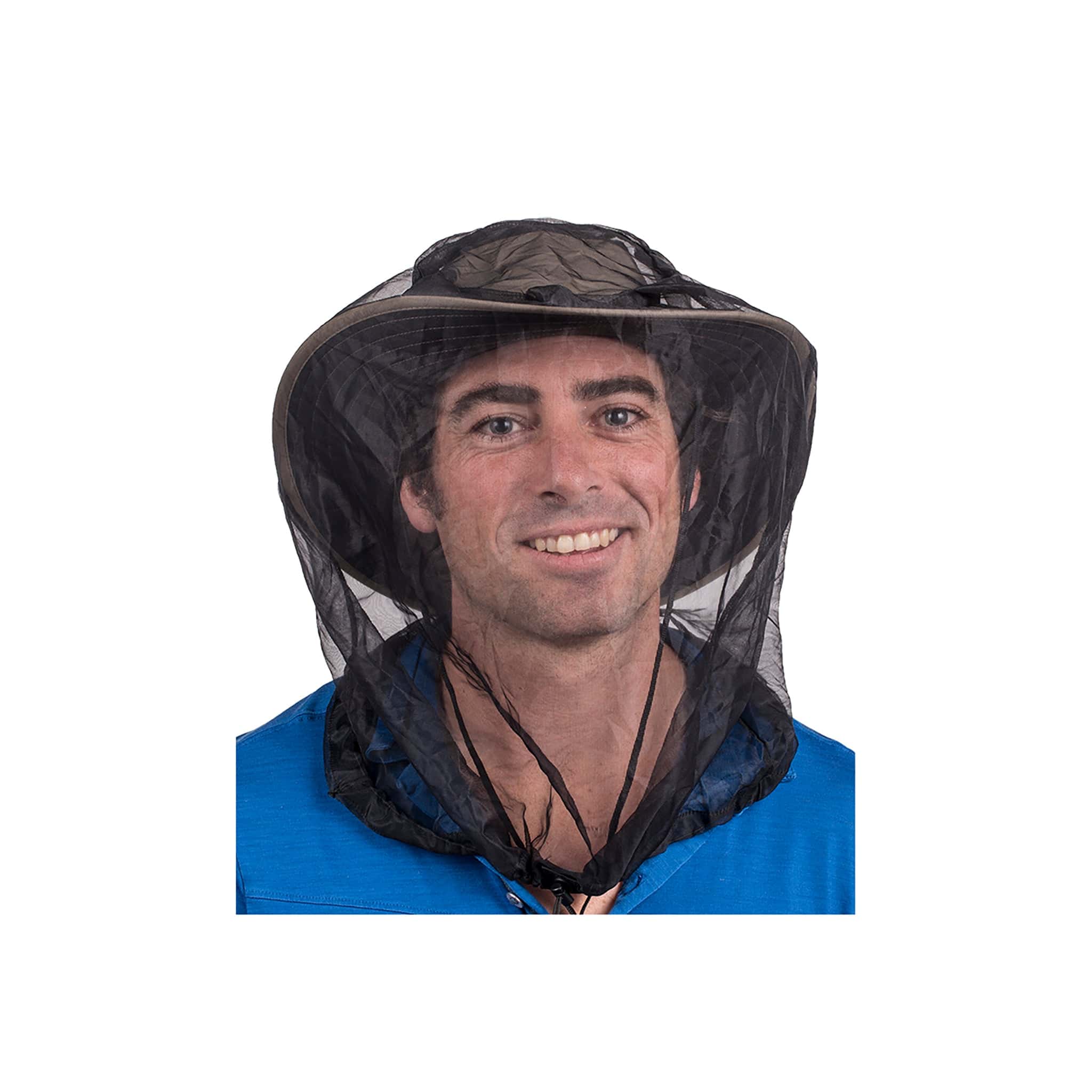
This is our first choice when the trip may involve tiny biting midges as well as mosquitoes. Sea to Summit explicitly identifies the Ultra-Fine model for that use, rather than relying only on a broad “bug protection” label.
The current specification lists 2,000 holes per square inch and a 23-gram packed weight. Those details distinguish it from the standard version, which looks similar in a shopping thumbnail.
Wear it over headgear that keeps the fabric away from your face and check the neck closure before moving into an insect-heavy area. The choice here is the maker’s explicit fine-insect application, not a promise that a mesh count alone guarantees protection in every fit.
Key specs: 23 g packed · 2,000 holes/in² · nylon mesh · neck drawcord
Pros
- Maker specifies protection against tiny midges
- Fine mesh with an explicit density
- Drawcord adjusts the neck opening
Cons
- Needs careful fit around clothing
- Hat adds space and carry bulk
- No built-in frame to hold the mesh clear
Skip it if: your only concern is ordinary mosquitoes and you prefer a coarser mesh.
2. Sea to Summit Mosquito Head Net: Best for general mosquito protection
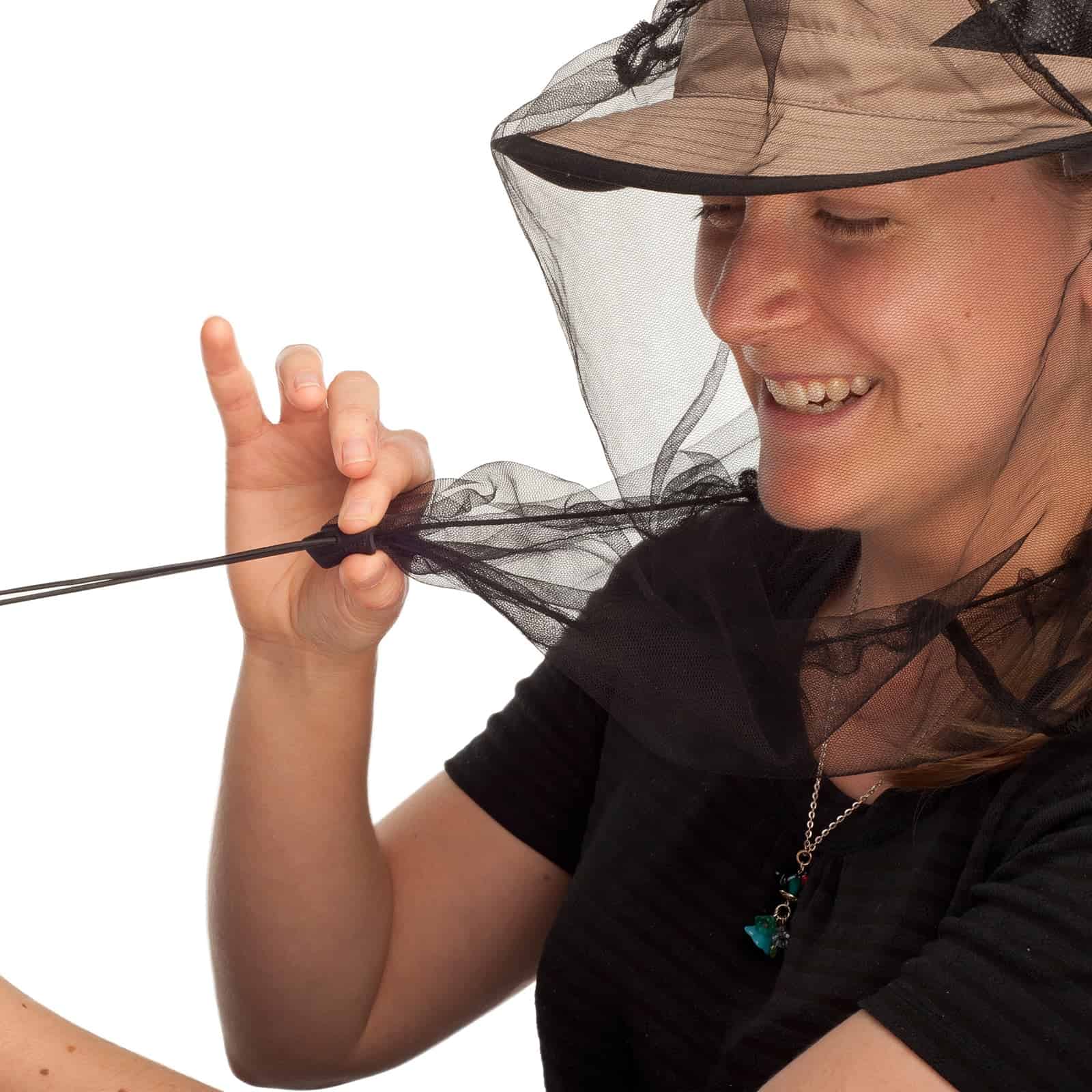
Choose the standard Sea to Summit net when mosquitoes are the target and a straightforward, packable design is what you need. It fits over a hat and closes around the neck with a drawcord.
The distinction from Ultra-Fine matters: the manufacturer’s FAQ says this standard model is not suitable for no-see-ums. A generic listing that omits the model name can hide that limitation.
At 24 grams, its listed weight is close to the Ultra-Fine version. Do not choose between the two on an old percentage-weight claim. Start with the insects you expect, then compare how the available mesh and fit suit your trip.
Reported in use: Australian Hiker’s review describes flies entering when the neck was left loose and recommends drawing it closed. The reviewer also preferred a broad brim to a peaked cap for face clearance. Those fit observations are useful; we use the current maker’s figures for weight.
Key specs: 24 g · 500 holes/in² · polyester mesh · neck drawcord
Pros
- Simple hat-compatible design
- Adjustable neck closure
- Packs into its supplied stuff sack
Cons
- Maker excludes no-see-um protection
- Requires space between mesh and skin
- No support frame for wearing bareheaded
Skip it if: tiny biting midges or no-see-ums are a known problem at your destination.
3. Ben’s InvisiNet Head Net: Best for prioritizing visibility

The InvisiNet is worth considering when looking through the net is your main concern. Ben’s uses fine fibers and a dark mesh, with an elastic crown and an adjustable neck. Those are design features, rather than a measured visibility score in this comparison.
The maker’s page gives a pore dimension instead of the holes-per-square-inch count used by other brands. We have left those formats as stated rather than converting them into a misleading ranked mesh table.
Ben’s product-family guidance distinguishes its UltraNet for tiny no-see-ums, while the InvisiNet copy uses broader insect language. For a trip specifically centered on those smallest biters, we would choose a model with a clearer matching specification, such as the Ultra-Fine pick above.
Reported in use: Daniel Hu, quoted by Backpacking Light, reported mosquito bites on his ears where the InvisiNet touched them when worn bareheaded. This is a reason to check clearance around your ears as well as your nose, even when insects cannot pass bodily through the net.
Key specs: Under 1 oz · 20-denier fibers · stated 1 mm rhombus pores · neck drawcord
Pros
- Thin fibers prioritize the view through the net
- Elastic crown helps position it
- Adjustable neck and storage sack
Cons
- Skin contact can allow bites, as reported above
- Needs headgear that keeps mesh clear of the ears
- Not our pick for a known tiny-midge destination
Skip it if: you need an unambiguous recommendation specifically for no-see-ums.
4. Coghlan’s Deluxe Head Net: Best with built-in hoops
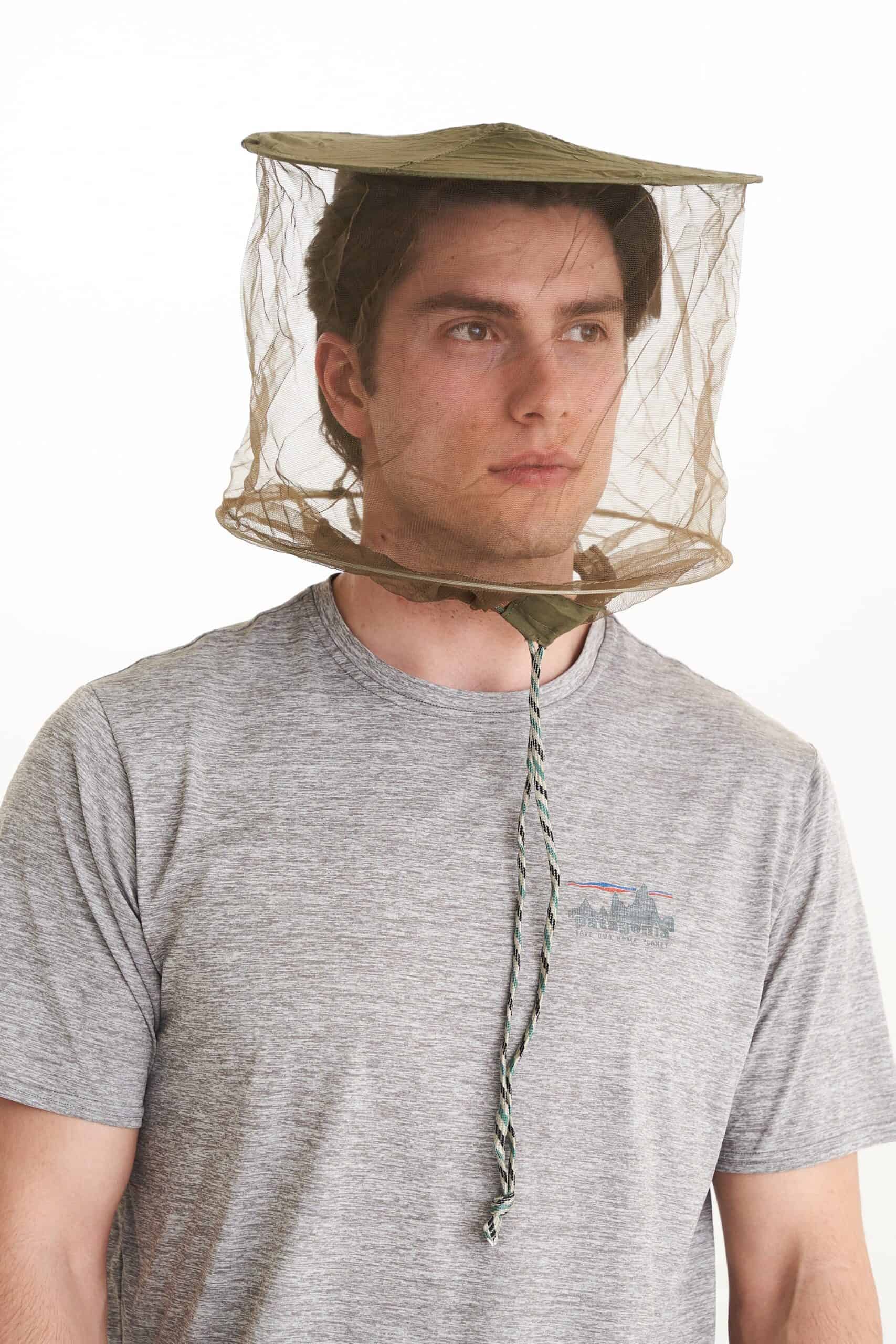
The Deluxe model is the alternative for someone who dislikes loose mesh hanging close to the face. Its hoops support the net, and an adjustable headband helps position it without relying on a separate hat brim for the same structure.
That structure is the reason to buy it, and also the reason it is less appealing for a tiny pocket kit. Compare its packed shape with the space you actually have rather than assuming all head nets disappear into the same-sized sack.
The current 9360 page lists 1,150 holes per square inch. We have not supplied a carry weight because we could not verify one in its product specifications; store shipping metadata is not a reliable substitute.
Key specs: Model 9360 · 1,150 holes/in² · polyester mesh · cotton crown · support hoops
Pros
- Hoops hold the mesh away from the face
- Adjustable headband
- Drawcord at the neck
Cons
- More structure to pack
- Hoops must keep their shape in your luggage
- Crown and hoops may not suit existing headgear
Skip it if: you already like wearing a brimmed hat and want the simplest packable net.
5. Coghlan’s Mosquito Head Net: Best inexpensive backup
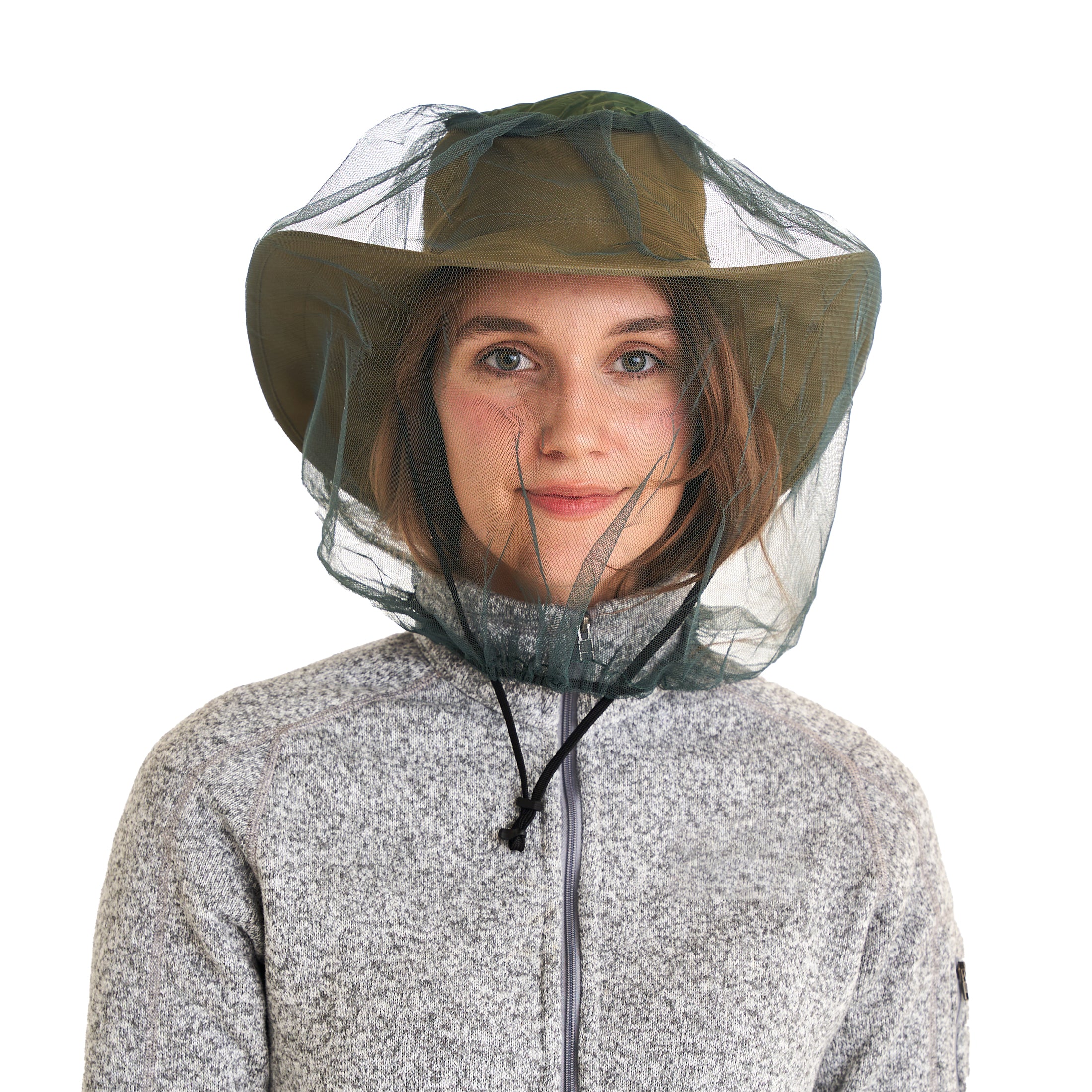
The basic Coghlan’s net is the low-cost option for keeping a mosquito barrier with spare gear. It goes over headgear and uses an elastic neck opening, making the design simple but less adjustable than a drawcord model.
Check the model carefully. The current 2508 listing specifies 300 holes per square inch. Coghlan’s sells several nets, and specifications quoted for its Deluxe or other models do not automatically apply here.
We would use this buying category for ordinary mosquito protection and an occasional backup, not select it specifically for tiny biting midges. Its product weight was not verifiable from the cited specifications, so the comparison leaves that field blank.
Key specs: Model 2508 · 300 holes/in² · polyester mesh · elastic neck opening
Pros
- Lowest price band in this selection
- Simple over-headgear fit
- Few adjustment parts
Cons
- Elastic neck has limited adjustment
- Needs headgear to hold mesh away from the face
- Not our choice for tiny midges
Skip it if: you want fine-insect coverage or need a precisely adjustable neck seal.
How we chose these head nets
Editor: Brian Hamilton. We compared current maker specifications and insect claims, then checked published wearer reports for fit problems a specification sheet cannot settle. The five picks cover fine-insect protection, ordinary mosquitoes, visibility, built-in support and a low-cost backup.
The linked Australian Hiker and Backpacking Light accounts describe their own use. We use them to identify closure and skin-clearance checks, without treating two reports as a comparative bite test. Mesh figures come from current makers, and unconfirmed product weights remain blank.
The shopping links search for the named products. Match the model and packaging before buying, particularly for the two Sea to Summit nets and the different Coghlan’s versions.
Will a mosquito head net stop no-see-ums and midges?
Not necessarily. “Mosquito net” does not identify the opening size or establish protection against every smaller insect. Sea to Summit explicitly distinguishes its standard net from the Ultra-Fine version for this reason.
For a destination known for tiny biting midges, choose a model whose maker clearly specifies that use. Then check the fit around the neck and clothing. Fine mesh is of little help if an insect can enter through an open gap.
Do not compare every mesh number as if it means the same thing. Holes per square inch describe a count; a millimeter measurement describes an opening dimension. Fiber thickness and weave shape also matter. We have not converted Ben’s stated pore size into an invented mesh-density figure.
Even a larger holes-per-inch count is not a complete guarantee across different fabrics. Use the maker’s application guidance and the actual net design together, instead of treating one numerical threshold as universal.
How do you wear a head net properly?
- Put it on before entering the worst insect activity if possible.
- Use the intended headgear or built-in support to create space around your face.
- Arrange the lower edge over your collar or clothing as the design allows.
- Adjust the neck opening securely and comfortably, without overtightening.
- Check for holes, trapped insects and gaps before continuing.
A brim helps keep mesh away from skin and makes the viewing area more predictable. Try the combination with your normal hat, glasses and jacket at home. The net should not block your vision or interfere with the activity you are doing.
The supported Coghlan’s Deluxe offers another approach, using hoops to hold its shape. Decide whether that structure solves a comfort problem for you or merely adds something awkward to pack.
Which net fits your insect, hat and collar combination?
Choose the insect coverage first, then test the net with the exact hat, glasses and jacket you will wear. A brim that creates space in front can still leave the ears against mesh or pull the lower edge away from clothing.
| Your setup | Start with | Reject the fit if… |
|---|---|---|
| Tiny midges expected; brimmed hat | Sea to Summit Ultra-Fine | The net catches on the brim or lifts off the collar when you turn |
| Mosquitoes; your usual hiking hat | Sea to Summit standard | The neck drawcord leaves a gap; this model also excludes no-see-ums |
| Mosquitoes; clear view is the priority | Ben’s InvisiNet | Mesh rests on ears or nose, even if the elastic crown feels secure |
| You want face clearance without a separate hat | Coghlan’s Deluxe 9360 | The headband slips or the hoops press into your glasses |
| A spare net over existing headgear | Coghlan’s 2508 | The elastic opening does not sit closely over your collar |
These are fit checks for the listed designs, not reports that every model has failed them. For tiny midges, choose an explicitly suitable mesh before checking comfort.
Try this before the trip: fasten your pack, look down at your feet, turn both ways and look up. Check whether the net rides above your collar, touches skin or obscures the route. Do this in a clear area, without deliberately exposing yourself to biting insects.
If the combination fails, change the headgear or net while you can still return it. A larger brim is helpful only if the net has enough room to cover it and still reach your collar. Fit is more useful to check at home than an imagined protection score.
Our mosquito jacket guide covers the rest of that clothing decision. A head net leaves exposed hands and other uncovered skin outside its barrier.
Can you eat, drink or sleep in a head net?
Plan food and drink breaks where you can manage the opening. Lifting the mesh to eat temporarily opens the barrier, so a place with lower insect activity is more convenient than trying to keep the closure sealed through a meal.
For sleep, use the insect protection appropriate to your shelter and its instructions. A face net is not a replacement for a tent or sleeping enclosure with properly closed insect mesh. Do not assume a loose neck drawcord is suitable for every sleeping setup or for children.
Check the rest of your overnight equipment with our camping checklist. The useful system is the one you can keep using through camp chores, breaks and bedtime.
How do you look after a mosquito head net?
Inspect it before packing, especially around seams and the neck closure. A small tear can undermine the reason you chose fine mesh. Keep it away from exposed hook-and-loop fasteners, sharp tools and other items that can snag it in the bag.
Follow its care label for washing and any treatment restrictions, then let it dry before storage. Do not assume an insect-treatment product is suitable for every net material or that all nets in a brand’s range arrive treated.
Keep the storage sack easy to find. A net buried under the rest of your gear is less useful when insects become troublesome during a short stop.
Which head net is the best starting point?
Choose Sea to Summit Ultra-Fine when the smallest biting insects are part of the decision. Choose the standard version for its stated mosquito use, and Ben’s InvisiNet if its visibility-focused design suits you and its insect coverage matches your destination.
Coghlan’s Deluxe is the structured option; the basic 2508 is the inexpensive spare. With any of them, confirm the model and try the full hat-and-clothing combination before the trip.
